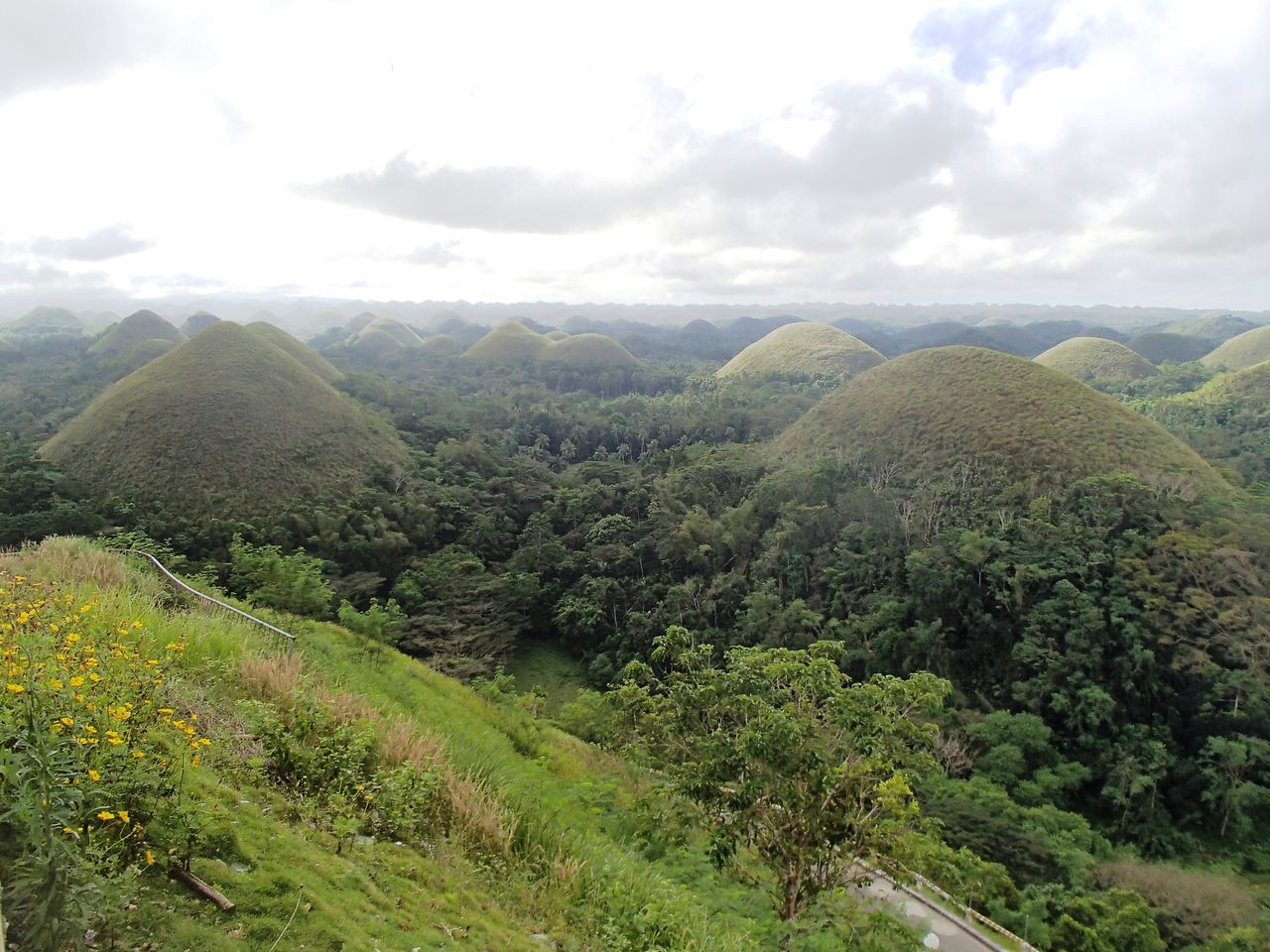
Observation Deck
The primary viewing platform offers a 360-degree perspective of the surrounding conical hills. It is reached via a concrete staircase consisting of 214 steps.
Use the perimeter railings for a stable landscape photo.
Bohol spans 4,821 square kilometers of central Visayas, anchored by 1,776 conical limestone hills, one of the planet's oldest primate species, and a coral-reef system that stretches across three municipalities. The island's topology—karst formations rising from rainforest basins, spring-fed rivers cutting through mahogany corridors, and barrier reefs protecting powder-white coastlines—creates a visitor landscape that moves between geological spectacle, wildlife encounter, and Spanish colonial remnant. This guide maps the province's signature sites with the access details and natural context that turn a touring itinerary into informed travel.
Quick answer
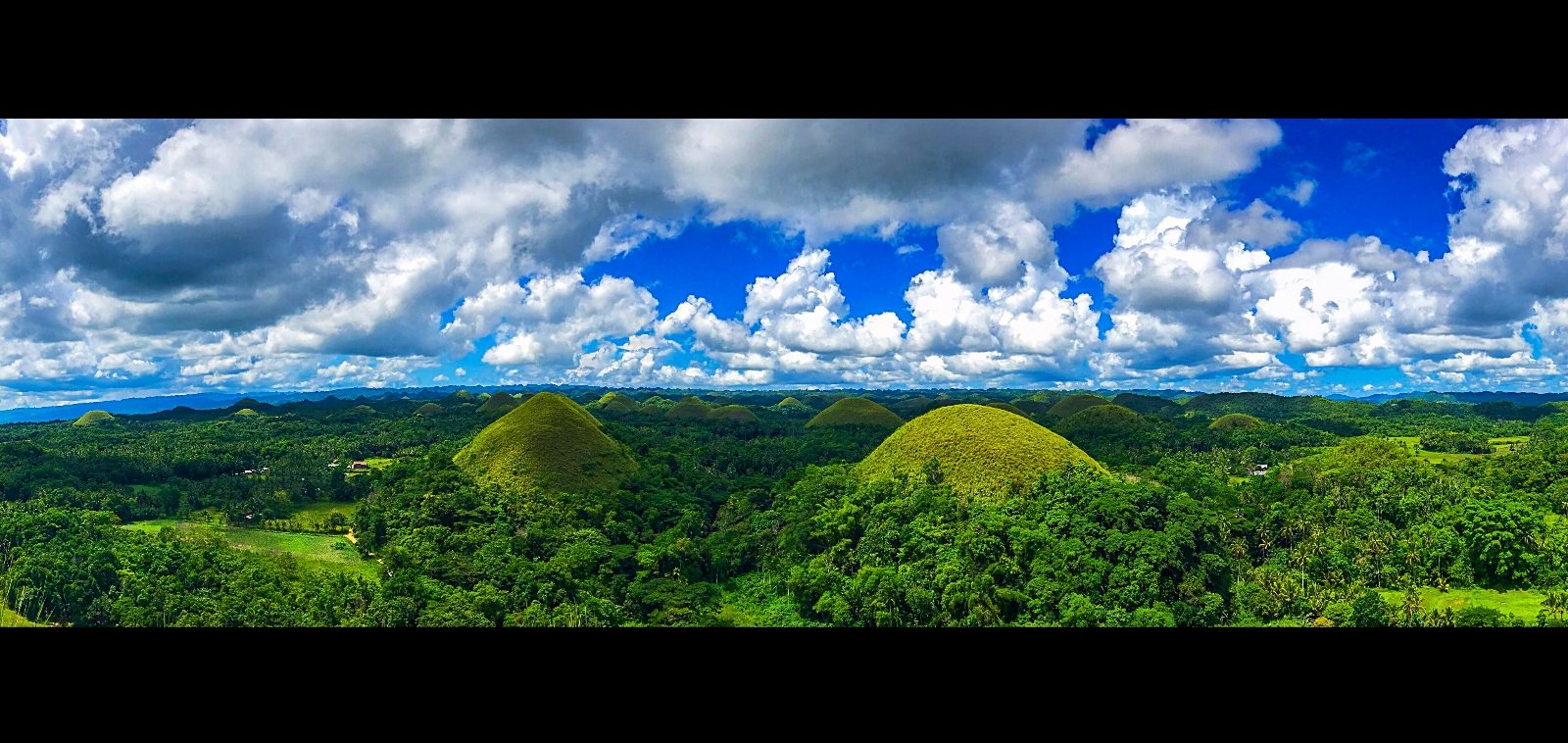
Tourist spots in Bohol with description include the Chocolate Hills, 1,776 grass-covered limestone mounds that turn bronze in the dry season; the Philippine Tarsier Sanctuary in Corella, home to the 4-inch nocturnal primate; Loboc River's spring-fed waterway flanked by mahogany forest; Baclayon Church, a 1595 coral-stone structure; Panglao Island's Alona Beach and reef-diving sites; and the Hinagdanan Cave, an underground limestone chamber with a natural skylight opening to a freshwater lagoon.
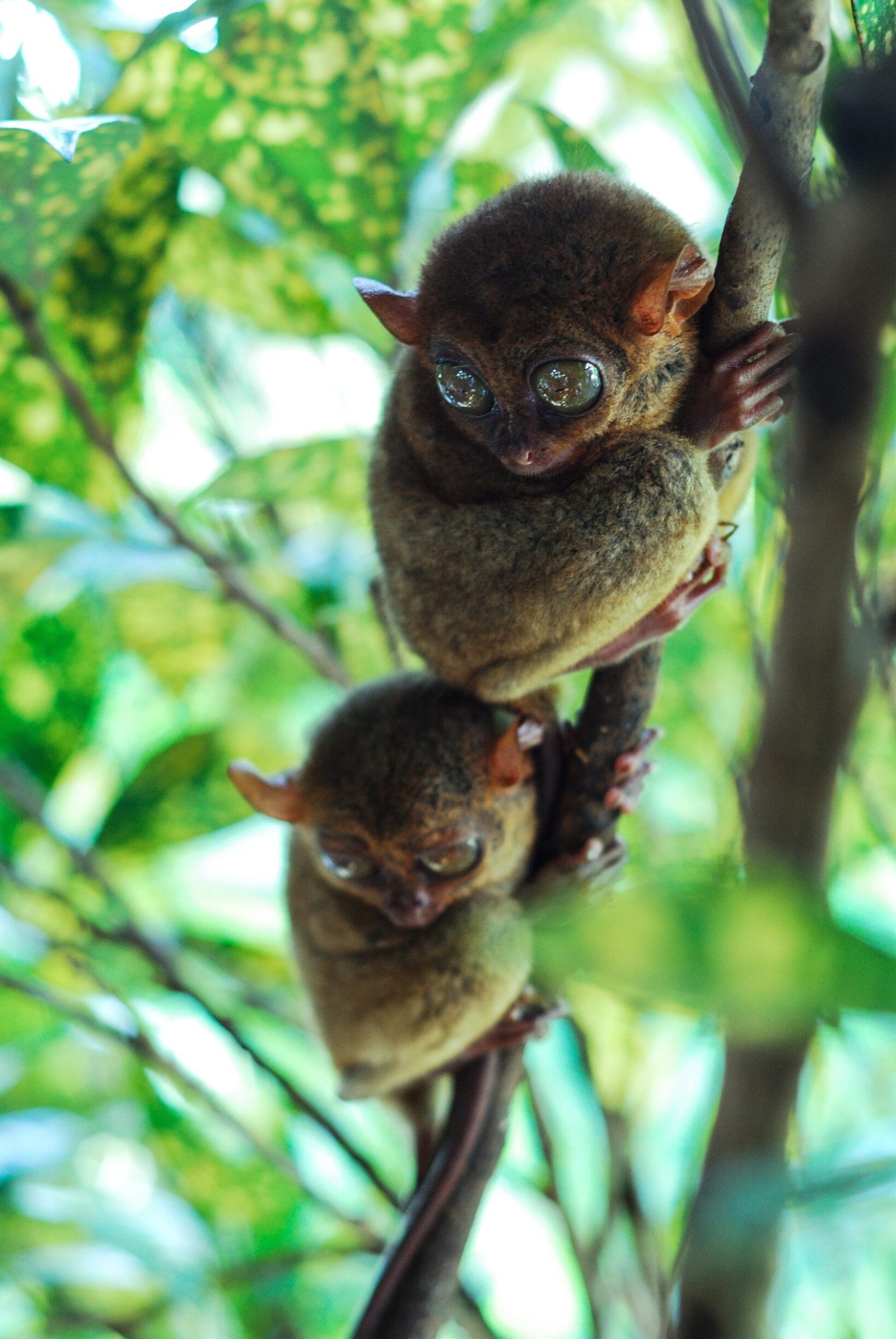
The Chocolate Hills occupy 50 square kilometers of Carmen and Sagbayan, a karst formation laid down 2 million years ago when coral reefs lifted above sea level and rainwater carved the limestone into uniform domes. The hills reach between 30 and 120 meters, covered in cogon grass that photosynthesizes green during the wet months and oxidizes to rust-brown by March. A 214-step staircase leads to the viewing deck at 08:00 daily, with a 100 PHP conservation fee per person. The Philippine Tarsier Sanctuary protects 134 hectares of secondary forest where Tarsius syrichta—one of the world's smallest primates, weighing 120 grams with 16-millimeter eyes—clings to bamboo and strangler fig. The sanctuary operates as a research and breeding facility, with boardwalk access that keeps visitors three meters from nesting sites. Tarsiers are crepuscular; morning visits between 08:00 and 09:30 align with their active period before the midday heat forces them deeper into cover. Loboc River extends 20 kilometers from the interior highlands to Bohol Sea, its brackish lower section forming estuarine habitat for mudskippers and mangrove crabs. Floating restaurant platforms depart hourly from the Loay Interior Road dock, tracing a route past nipa-palm settlements and the 1602 Loboc Church, its coral-block facade rebuilt after the 2013 earthquake that collapsed the bell tower. Panglao Island connects to the mainland via two causeways, its southwest coast lined with Alona Beach—a 1.5-kilometer stretch of crushed-coral sand fronting a house reef that drops to 30 meters within 200 meters of shore. Dive operators run daily trips to Balicasag Island's wall dives and Pamilacan's seasonal whale-shark corridor. Hinagdanan Cave, 400 meters inland from the north coast, descends through a collapsed roof into a limestone chamber where a 10-meter-deep lagoon reflects stalactites under natural skylight. Baclayon Church anchors the oldest Christian settlement in the Visayas, its 1.5-meter-thick walls quarried from coral heads and bonded with egg-white mortar. The adjacent museum holds a collection of 16th-century liturgical vestments and a ivory santos collection, though the 2013 quake reduced the original retablo to fragments now under restoration. The church opens at 08:00; the museum requires a separate 50 PHP entry. Bohol's tourist spots blend geological age—the hills and caves shaped over epochs—with colonial infrastructure that survives in working churches and riverside settlements, all overlaid by a conservation framework that meters access to fragile wildlife populations and reef systems.
“The Chocolate Hills occupy 50 square kilometers of karst, a formation laid down 2 million years ago when coral reefs lifted above sea level and rainwater carved the limestone into 1,776 uniform domes.”
The tourist spots in Bohol maintain a consistent daily schedule to accommodate visitors throughout the week. These hours remain uniform from Monday through Sunday.
The Chocolate Hills complex features a series of geological formations that serve as the focal point of the Bohol countryside. Visitors navigate the area by ascending the observation deck to view the landscape.
The primary viewing platform offers a 360-degree perspective of the surrounding conical hills. It is reached via a concrete staircase consisting of 214 steps.
Use the perimeter railings for a stable landscape photo.
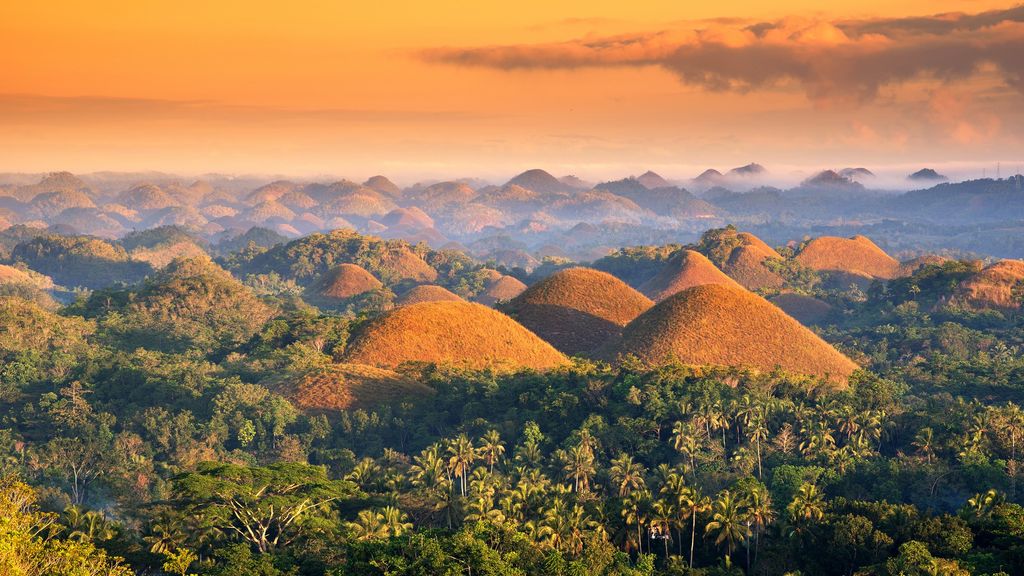
These grass-covered limestone mounds change color based on the season, turning brown during the dry months. They are spread across the municipalities of Carmen, Batuan, and Sagbayan.
Look for the tallest hills to identify the geological scale.
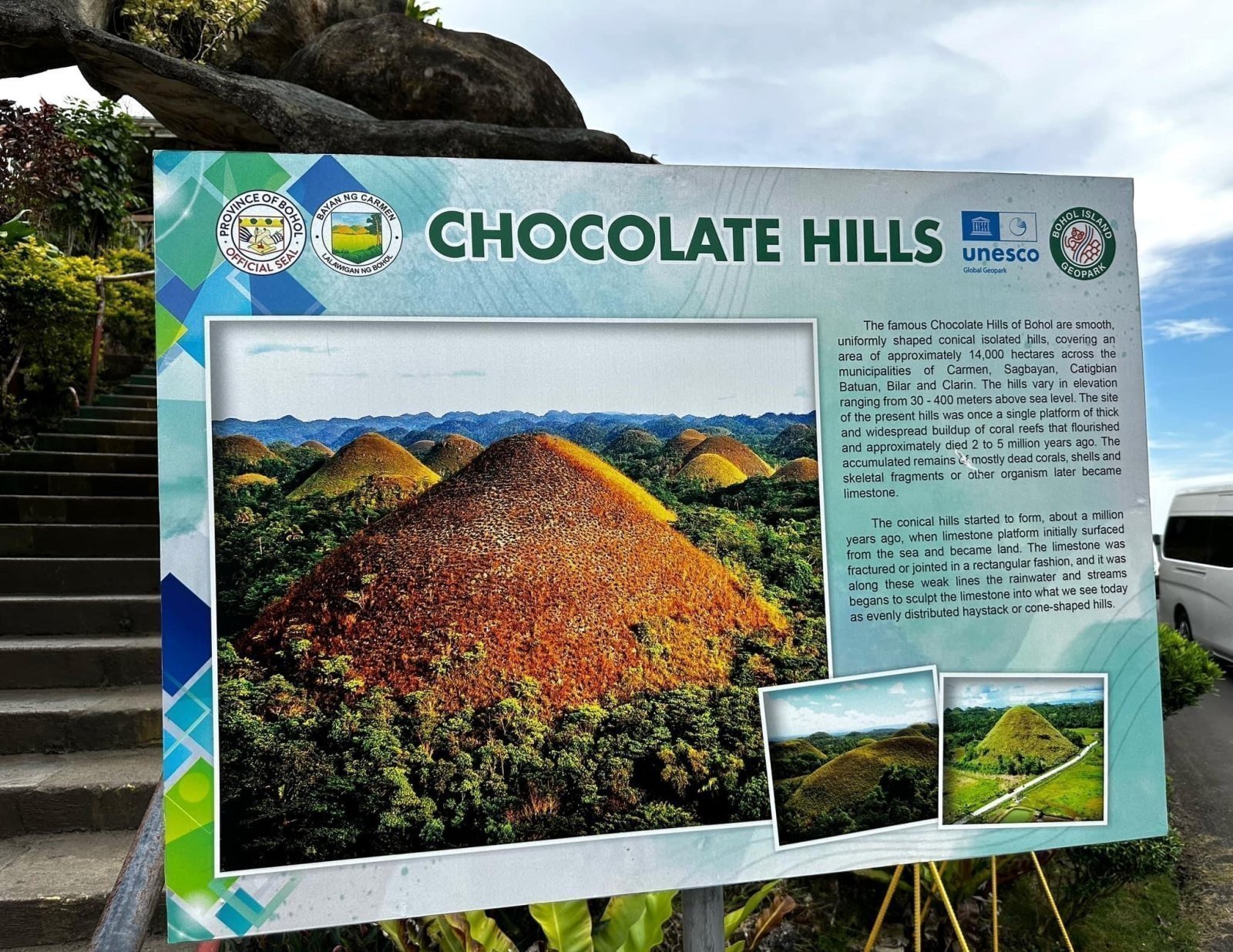
This area provides a staging ground for guests before they begin the climb to the summit. It includes informational signage regarding the local topography.
Read the display boards to understand the formation process.
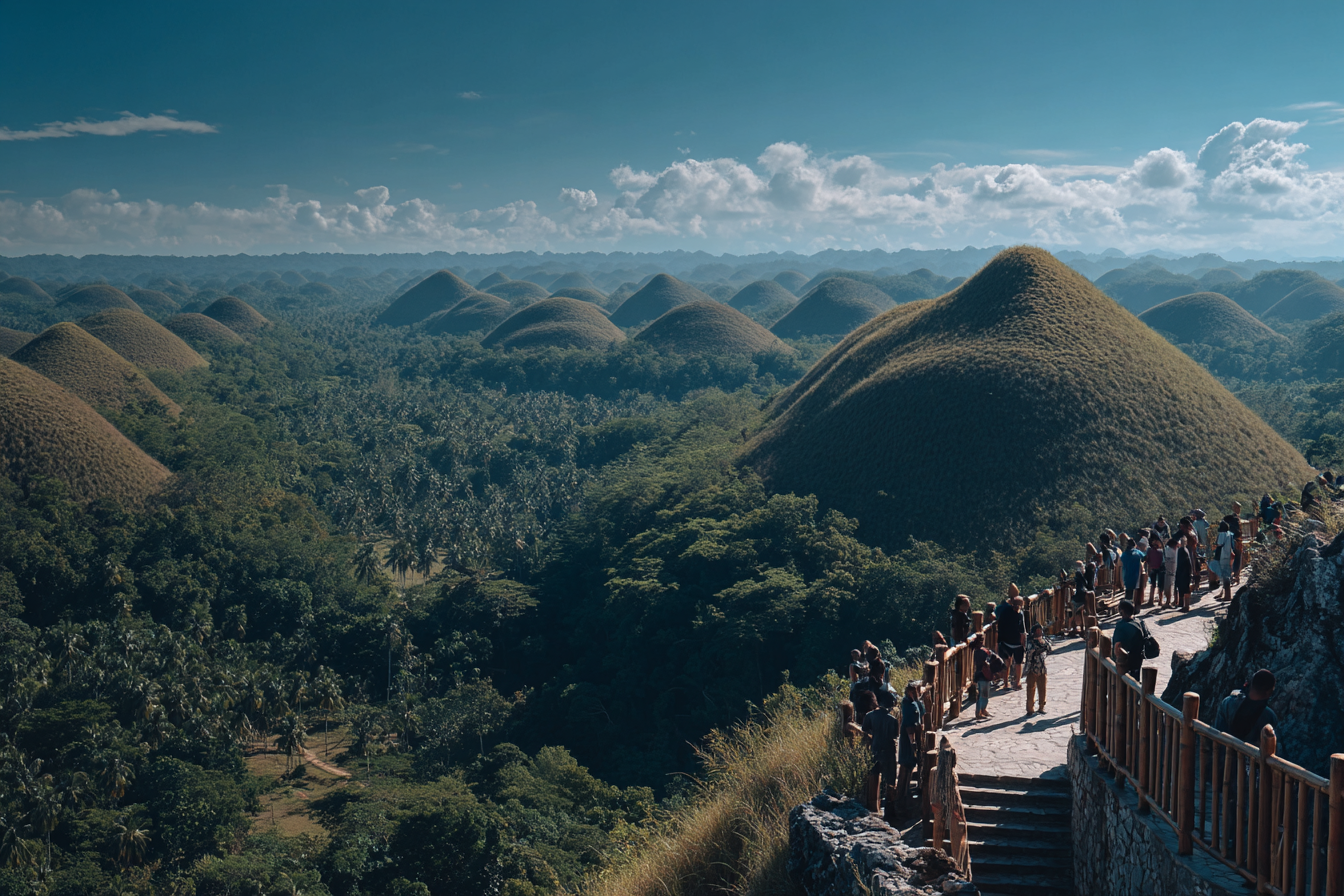
Lower paths around the base allow for a different perspective of the hills from the ground level. These routes are flatter than the ascent to the main deck.
Walk the perimeter path to see the hills from below.
The site requires navigation of 214 steps to reach the observation points, which limits accessibility for visitors with mobility impairments. There are no ramps or mechanical lifts available to bypass these stairs.
The observation area is only reachable via 214 steps.
No level paths exist to access the main viewing decks.
Standard facilities are present but do not meet specialized accessibility standards.
Visiting between 08:00 and 09:30 helps avoid peak crowd density.
The following sites are located along the same route in Carmen, allowing for efficient travel when grouped together. Integrating these spots helps maximize your time in the interior of Bohol.
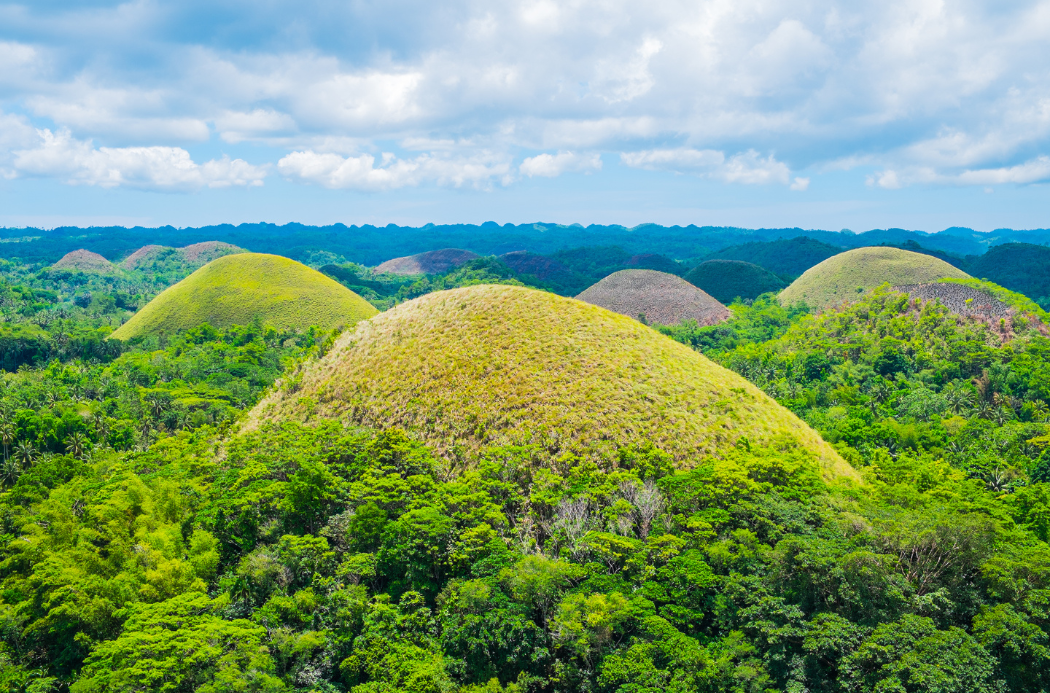
5 min drive
This park provides a different vantage point of the landscape and offers outdoor activities for those interested in physical engagement.
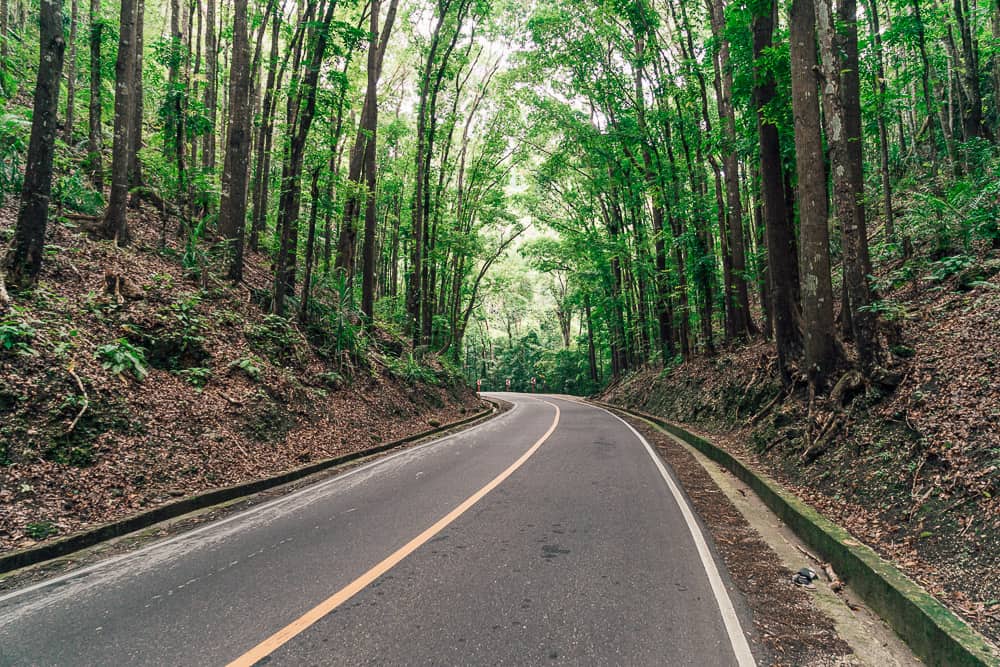
20 min drive
Located on the border of Loboc and Bilar, this dense mahogany plantation is a natural stop when driving toward Carmen.
30 min drive
This sanctuary focuses on the conservation of the species and is situated along the main arterial road leading to the central Bohol attractions.
Everything you need to know about tourist spots in bohol with description
Travelers often prioritize the Chocolate Hills, Tarsier sanctuaries, and historic churches when looking for tourist spots in bohol with description. These sites offer a mix of geological wonders and local wildlife. You can find detailed maps of these Bohol landmarks on our logistics page to help plan your trip. Each location provides a unique glimpse into the island's natural heritage.
Access to primary sites typically requires a 100 PHP conservation fee per person. This fee supports the maintenance and preservation of these protected areas. Please ensure you have local currency available as you travel between different tourist spots in bohol with description.
We recommend arriving between 08:00 and 09:30 to experience these areas before large tour groups arrive. This window also helps you avoid the intense midday heat while exploring the landscape. Planning your schedule around these hours ensures a more relaxed visit to various tourist spots in bohol with description.
Some natural formations, such as the Chocolate Hills observation deck, require climbing 214 steps for the best vantage point. Visitors should be prepared for this physical activity during their excursion. Always check accessibility details before heading to specific sightseeing locations.
A standard countryside tour usually features the Chocolate Hills, the Loboc River, and the Tarsier Conservation Area. These destinations are well-connected by road, making it easy to visit multiple spots in one day. Focus your journey on these central hubs for the most efficient travel experience.
Yes, most popular sites are family-friendly and accessible for children. However, keep in mind that some areas involve uneven terrain or steep staircases, so supervision is necessary. Always confirm specific requirements for each location prior to your visit.
Is Bohol Worth Visiting?
Read more GuideBohol Countryside Tour DIY Guide
Read more GuideCountryside Tour Map
Read more GuideBohol Countryside Tour Rates and Fees
Read more Tickets & toursCountryside Tour from Cebu
Read more Tickets & toursCountryside Tour from Panglao
Read more GuideItinerary and Entrance Fees
Read more